Product Description
- Product Information
- Our Products
|
HangZhou GD Machinery CO.,LTD. |
|
|
Product |
|
|
tie rod hydraulic cylinder, welded hydraulic cylinder, telescopic cylinders cylinder, flange type hydraulic cylinder, hydraulic cylinder with valve function, hydraulic power unit, Hydraulic manifold block, pneumatic fitting, |
|
|
Material |
Tube – Cold Drawn Precision seamless Tubing Mounts – Trunnion with angular Swivels |
|
应用 |
Agriculture, Concrete & Asphalt, Cranes, Fire & Rescue, Forestry & Logging,Mining & Rock Crushing,Oil & Gas, Snow & Ice Control,Waste Management and Material Recycling Industry , Engineering Equipment, Special Vehicle |
|
Feature |
1.High quality with a reasonable price 2.ISO9001-2008 3.Customized specification are accepted |
|
Payment |
T/T;L/C, Paypal |
|
Port |
HangZhou ,China |
|
Quotation |
According to the specific request |
|
MOQ |
According to the product |
|
Packaging |
metal case;plywood case;carton or as requirement |
|
Delivery time |
30days upon receipt of 30% deposit; or upon receipt of relevant L/C; |
- Working Process
- Packing and Shipping
- Company Information
HangZhou GD Machinery is specialized to offer high precision all kind of hydraulic valves and hydraulic cylinder.we also have some hydraulic valve from CHINAMFG brand aboard
With a wide range, good quality ,reasonable price,our products are extensively used in the industries of construction machinery,machine tool,plastic machinery,vehicle. mining equipment,metallurgy,shipyard,food machinery,agricultural machinery,and other industries.
Our products are widely recognized and trusted by users and can meet continuously changing economic and social needs.
Welcome new and old customers to contact us for future business. we will offer you good quality and best price.
- Company Show
- Our Service
1. Sample service: samples will be provided according to customer’s instruction.
2. Customized services: a variety of cylinders can be customized according to customer demand.
3. Warranty service: In case of quality problems under 1 year warranty period, free replacement will be made for customer.
- FAQ
Q: Do you accept OEM manufacturing?
A: Yes! We do accept OEM manufacturing. We will quote you the exact price and make the exact cylinder according to your specification and drawing.
Q: Can we design our own package or print our own logo?
A: Yes! Package and logo will be made acording to your requirements.
Q: Could we get small quantity samples?
A: Yes! We understand the quality test is important and we are glad to make the sample for you. The MOQ is 1pcs.
Q: How long is the production time?
A: Generally the production time is 30 days.
Q: What is your payment term?
A: For sample payment, generally 100% T/T payment in advance, west union, paypal.
For order payment, generally is 30% T/T in advance, 70% balance before shipment. If you require the different payment term, let us negotiate it together.
| Certification: | ISO9001, SGS |
|---|---|
| Pressure: | Medium Pressure |
| Work Temperature: | Normal Temperature |
| Samples: |
US$ 15/Piece
1 Piece(Min.Order) | Order Sample |
|---|
| Customization: |
Available
|
|
|---|
.shipping-cost-tm .tm-status-off{background: none;padding:0;color: #1470cc}
| Shipping Cost:
Estimated freight per unit. |
about shipping cost and estimated delivery time. |
|---|
| Payment Method: |
|
|---|---|
|
Initial Payment Full Payment |
| Currency: | US$ |
|---|
| Return&refunds: | You can apply for a refund up to 30 days after receipt of the products. |
|---|
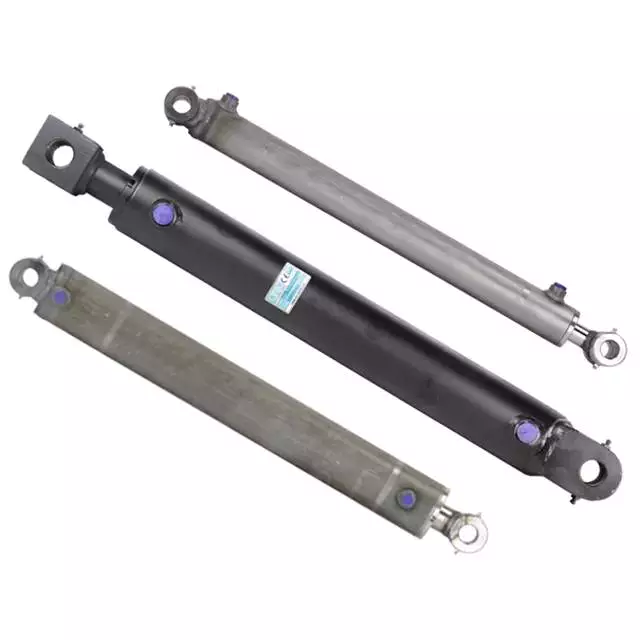
What role do hydraulic cylinders play in optimizing power distribution and efficiency?
Hydraulic cylinders play a significant role in optimizing power distribution and efficiency in various applications. They are widely used in industries such as construction, manufacturing, agriculture, and transportation, where efficient power transmission and precise control are essential. Here’s a detailed explanation of the role hydraulic cylinders play in optimizing power distribution and efficiency:
1. Power Transmission:
– Hydraulic cylinders serve as a means of power transmission in hydraulic systems. They convert the hydraulic fluid’s pressure and flow into linear mechanical force, allowing for controlled movement of loads. Hydraulic cylinders efficiently transmit power from an energy source, such as a hydraulic pump, to the working components of the system. The ability to transmit power over long distances with minimal energy losses makes hydraulic cylinders an efficient choice for various applications.
2. High Power Density:
– Hydraulic cylinders offer high power density, meaning they can generate significant force relative to their size. This characteristic enables compact and lightweight hydraulic systems while delivering substantial power output. Hydraulic cylinders can produce high forces even at low operating speeds, making them suitable for heavy-duty applications. The high power density of hydraulic cylinders contributes to the optimization of power distribution by maximizing the force output while minimizing the system’s overall size and weight.
3. Load Handling and Control:
– Hydraulic cylinders provide precise load handling and control capabilities, contributing to power distribution optimization. By adjusting the flow of hydraulic fluid to the cylinder, operators can control the speed, force, and direction of the cylinder’s movement. This level of control allows for accurate positioning and smooth operation of loads, reducing energy waste and improving overall system efficiency. Hydraulic cylinders enable precise load handling and control, leading to optimal power distribution and improved energy efficiency.
4. Variable Force and Speed:
– Hydraulic cylinders offer the advantage of variable force and speed control. By regulating the flow of hydraulic fluid, the force exerted by the cylinder can be adjusted as needed. This flexibility enables hydraulic systems to adapt to different load requirements, optimizing power distribution. Hydraulic cylinders can operate at varying speeds, allowing for efficient power distribution across different stages of an operation. The ability to vary force and speed according to the application’s demands enhances energy efficiency and overall system performance.
5. Energy Recovery:
– Hydraulic cylinders can contribute to energy efficiency through energy recovery mechanisms. In certain applications, hydraulic systems utilize accumulators to store and release energy. Hydraulic cylinders can store energy during deceleration or when the load is lowering, and then release it to assist in subsequent movements. This energy recovery process reduces the overall energy consumption of the system, optimizing power distribution and improving efficiency. The ability to recover and reuse energy enhances the sustainability and cost-effectiveness of hydraulic systems.
6. Integrated Control Systems:
– Hydraulic cylinders can be integrated into advanced control systems, such as servo control or proportional control systems. These systems utilize electronic feedback, sensors, and control algorithms to optimize power distribution and efficiency. By continuously monitoring and adjusting the flow of hydraulic fluid, the control systems ensure that the cylinder operates at the most efficient operating point, minimizing energy losses and maximizing power distribution. Integrated control systems enhance the overall energy efficiency of hydraulic systems and contribute to power optimization.
7. System Efficiency Improvement:
– Hydraulic cylinders, when combined with other components in a hydraulic system, contribute to overall system efficiency improvement. The integration of efficient hydraulic pumps, valves, and actuators helps minimize energy losses, pressure drops, and heat generation. By optimizing the design and configuration of the hydraulic system, including the selection of appropriate cylinder sizes, operating pressures, and control strategies, power distribution can be optimized, leading to improved energy efficiency. Proper system design and component selection are critical for achieving optimal power distribution and efficiency.
In summary, hydraulic cylinders play a crucial role in optimizing power distribution and efficiency in various applications. They enable efficient power transmission, offer high power density, provide precise load handling and control, allow for variable force and speed control, facilitate energy recovery, can be integrated into advanced control systems, and contribute to overall system efficiency improvement. By leveraging the capabilities of hydraulic cylinders, industries can achieve better power utilization, reduced energy consumption, and improved system performance.
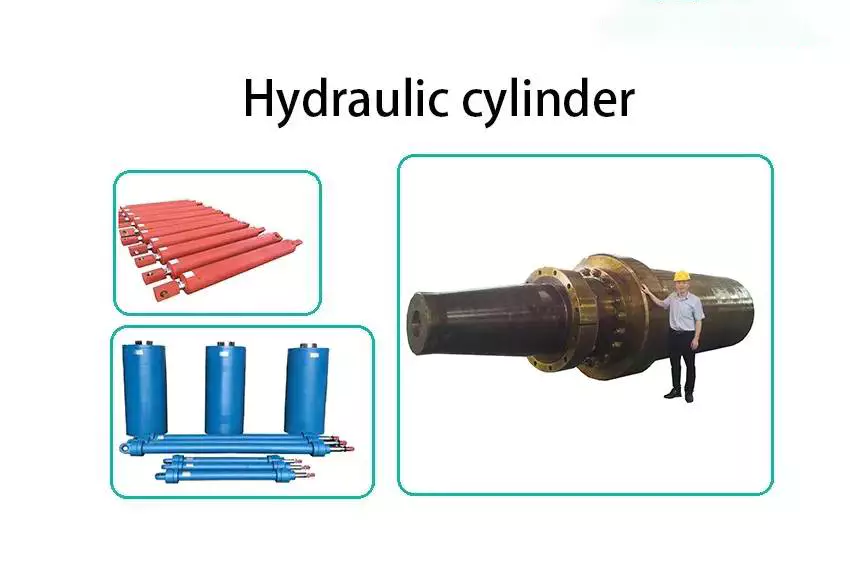
Adaptation of Hydraulic Cylinders for Medical Equipment and Aerospace Applications
Hydraulic cylinders have the potential to be adapted for use in medical equipment and aerospace applications, offering unique advantages in these industries. Let’s explore how hydraulic cylinders can be adapted for these specialized fields:
- Medical Equipment: Hydraulic cylinders can be adapted for various medical equipment applications, including hospital beds, patient lifts, surgical tables, and rehabilitation devices. Here’s how hydraulic cylinders are beneficial in medical equipment:
- Positioning and Adjustability: Hydraulic cylinders provide precise and smooth movement, allowing for accurate positioning and adjustments of medical equipment. This is crucial for ensuring patient comfort, proper alignment, and ease of use.
- Load Handling: Hydraulic cylinders offer high force capabilities, enabling the safe handling of heavy loads in medical equipment. They can support the weight of patients, facilitate smooth transitions, and provide stability during procedures.
- Controlled Motion: Hydraulic cylinders provide controlled and stable motion, which is essential for delicate medical procedures. The ability to adjust speed, position, and force allows for precise and controlled movements, minimizing patient discomfort and ensuring accurate treatment.
- Durability and Reliability: Hydraulic cylinders are designed to withstand rigorous use and demanding environments, making them suitable for medical equipment applications. Their durability and reliability contribute to the long-term performance and safety of medical devices.
- Aerospace Applications: Hydraulic cylinders can also be adapted for aerospace applications, where lightweight yet robust systems are essential. Here’s how hydraulic cylinders are advantageous in aerospace:
- Flight Control Systems: Hydraulic cylinders play a critical role in aircraft flight control systems, including ailerons, elevators, rudders, and landing gear. They provide precise and reliable actuation, allowing pilots to control the aircraft’s movements with accuracy and responsiveness.
- Weight Optimization: Hydraulic cylinders can be designed using lightweight materials, such as aluminum alloys or composite materials, to reduce overall weight. This weight optimization is crucial in aerospace applications to enhance fuel efficiency, payload capacity, and aircraft performance.
- Shock and Vibration Resistance: Aerospace environments involve significant shock and vibration forces. Hydraulic cylinders can be engineered to withstand these dynamic loads while maintaining performance and reliability, ensuring consistent operation even under extreme conditions.
- Space Constraints: Hydraulic cylinders can be designed to fit within the space constraints of aircraft or spacecraft. Their compact size and flexible mounting options allow for efficient integration into the limited available space.
In summary, hydraulic cylinders can be adapted for use in medical equipment and aerospace applications, leveraging their precise positioning, load handling capabilities, controlled motion, durability, and reliability. In medical equipment, hydraulic cylinders enable comfortable patient positioning, smooth transitions, and controlled movements during procedures. In aerospace, hydraulic cylinders provide precise actuation, weight optimization, shock and vibration resistance, and space-efficient solutions. By adapting hydraulic cylinders to these specialized fields, manufacturers can meet the unique requirements and enhance the performance of medical equipment and aerospace systems.

How do hydraulic cylinders generate force and motion using hydraulic fluid?
Hydraulic cylinders generate force and motion by utilizing the principles of fluid mechanics, specifically Pascal’s law, in conjunction with the properties of hydraulic fluid. The process involves the conversion of hydraulic energy into mechanical force and linear motion. Here’s a detailed explanation of how hydraulic cylinders achieve this:
1. Pascal’s Law:
– Hydraulic cylinders operate based on Pascal’s law, which states that when pressure is applied to a fluid in a confined space, it is transmitted equally in all directions. In the context of hydraulic cylinders, this means that when hydraulic fluid is pressurized, the force is evenly distributed throughout the fluid and transmitted to all surfaces in contact with the fluid.
2. Hydraulic Fluid and Pressure:
– Hydraulic systems use a specialized fluid, typically hydraulic oil, as the working medium. This fluid is stored in a reservoir and circulated through the system by a hydraulic pump. The pump pressurizes the fluid, creating hydraulic pressure that can be controlled and directed to various components, including hydraulic cylinders.
3. Cylinder Design and Components:
– Hydraulic cylinders consist of several key components, including a cylindrical barrel, a piston, a piston rod, and various seals. The barrel is a hollow tube that houses the piston and allows for fluid flow. The piston divides the cylinder into two chambers: the rod side and the cap side. The piston rod extends from the piston and provides a connection point for external loads. Seals are used to prevent fluid leakage and maintain hydraulic pressure within the cylinder.
4. Fluid Input and Motion:
– To generate force and motion, hydraulic fluid is directed into one side of the cylinder, creating pressure on the corresponding surface of the piston. This pressure is transmitted through the fluid to the other side of the piston.
5. Force Generation:
– The force generated by a hydraulic cylinder is a result of the pressure applied to a specific surface area of the piston. The force exerted by the hydraulic cylinder can be calculated using the formula: Force = Pressure × Area. The area is determined by the diameter of the piston or the piston rod, depending on which side of the cylinder the fluid is acting upon.
6. Linear Motion:
– As the pressurized hydraulic fluid acts on the piston, it generates a force that moves the piston in a linear direction within the cylinder. This linear motion is transferred to the piston rod, which extends or retracts accordingly. The piston rod can be connected to external components or machinery, allowing the generated force to perform various tasks, such as lifting, pushing, pulling, or controlling mechanisms.
7. Control and Regulation:
– The force and motion generated by hydraulic cylinders can be controlled and regulated by adjusting the flow of hydraulic fluid into the cylinder. By regulating the flow rate, pressure, and direction of the fluid, the speed, force, and direction of the cylinder’s movement can be precisely controlled. This control allows for accurate positioning, smooth operation, and synchronization of multiple cylinders in complex machinery.
8. Return and Recirculation of Fluid:
– After the hydraulic cylinder completes its stroke, the hydraulic fluid on the opposite side of the piston needs to be returned to the reservoir. This is typically achieved through hydraulic valves that control the flow direction, allowing the fluid to return and be recirculated in the system for further use.
In summary, hydraulic cylinders generate force and motion by utilizing the principles of Pascal’s law. Pressurized hydraulic fluid acts on the piston, creating force that moves the piston in a linear direction. This linear motion is transferred to the piston rod, allowing the generated force to perform various tasks. By controlling the flow of hydraulic fluid, the force and motion of hydraulic cylinders can be precisely regulated, contributing to their versatility and wide range of applications in machinery.


editor by CX 2023-11-19