Description
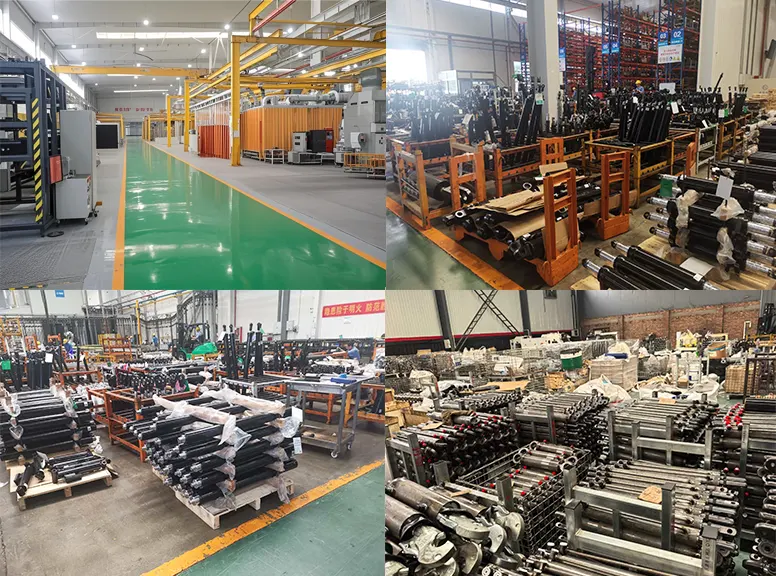
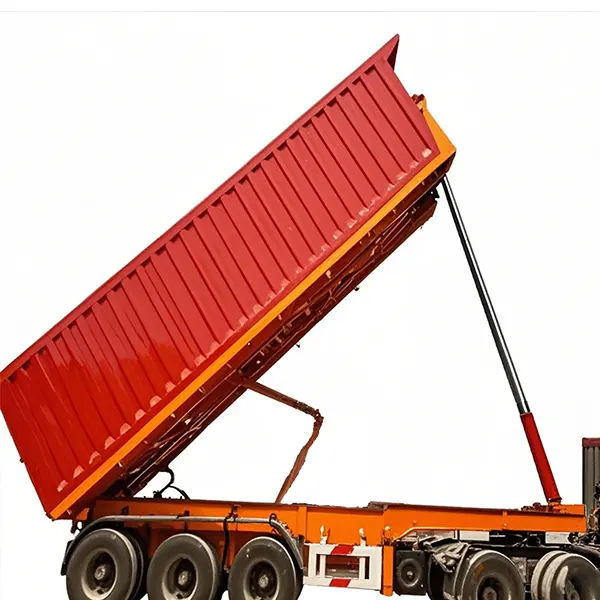
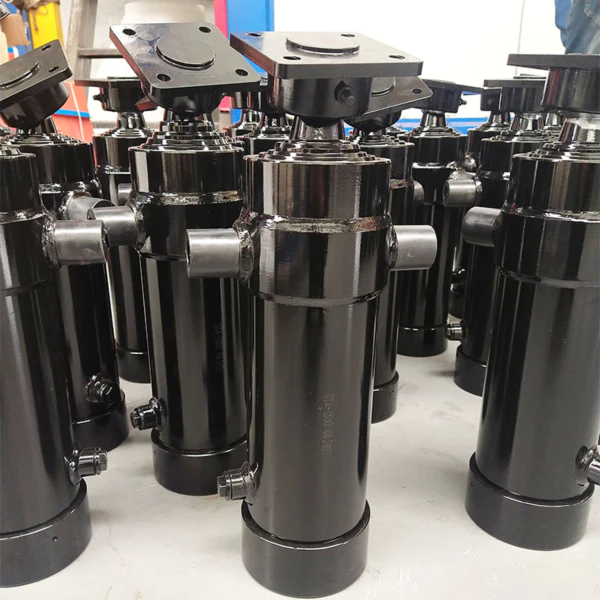
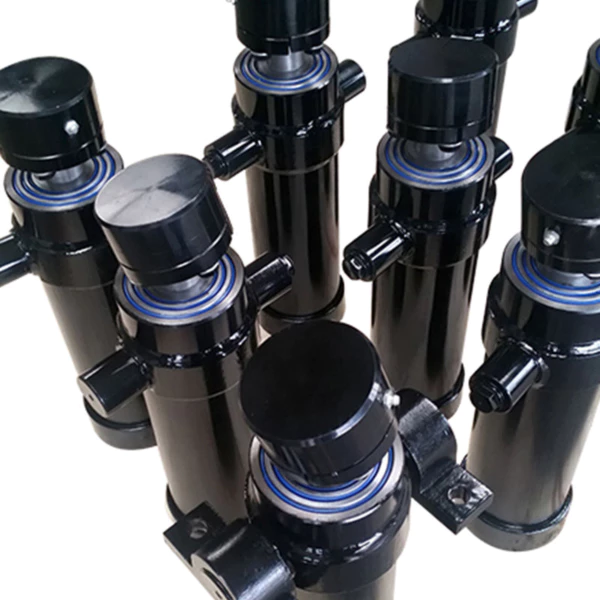
Dump trailer telescopic cylinders are crucial components of dump trucks, primarily responsible for managing the unloading process. These cylinders use a hydraulic system to provide the necessary force, allowing the truck to discharge its load efficiently. The telescopic cylinder for dump trailers features a multi-stage hydraulic design that enables extended lifting while being compact during retraction. This innovative structure makes it the preferred option for lifting systems in dump trailers, especially in scenarios demanding high lift angles and the ability to carry heavy loads. Our telescoping hydraulic cylinders for dump trailers are constructed from high-strength steel and include precision sealing technologies, ensuring reliability and longevity, even in challenging operational conditions.
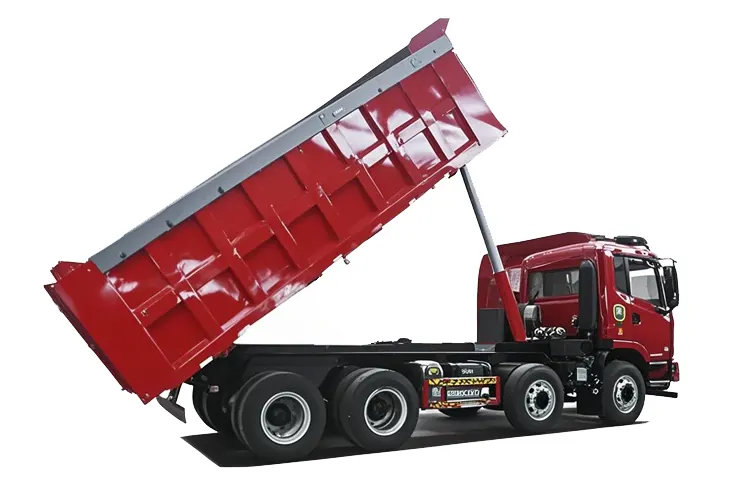
Telescopic Cylinder for Dump Trailer Specification
| Parameter | Specification/Description |
| Bore Size | 2–6 inch (50.8–152.4 mm) |
| Rod Size | 1.125–4 inch (28.6–101.6 mm) |
| Stroke Size | 6–48 inch (152.4–1219.2 mm) |
| Pin Size | 0.5–2 inch (12.7–50.8 mm) |
| Ports | G (BSP), SAE, NPT, M (Metric) |
| Working Pressure | 2000–4000 PSI (13.8–27.6 MPa) |
| Number of Stages | 2–9 stages |
| Lifting Capacity | 5–100 tons (depending on bore size and pressure) |
| Material | High-strength seamless steel (optional aluminum alloy for lightweight models) |
| Mounting Type | Front-end, underbody, or custom mounting (e.g., trunnion, clevis, or flange) |
| Operating Temperature | -30°C to 80°C (-22°F to 176°F) |
| Seal Type | Polyurethane, nitrile rubber, or composite seals (resistant to wear and oil) |
Main Structure Composition of Telescopic Dump Trailer Cylinder
| Base Cylinder/Barrel | Sleeves | Piston and Seals | Guide Rings and Support Rings |
| The base cylinder is the outermost fixed part, typically attached to the chassis or frame of the dump trailer. Material: High-strength steel or aluminum alloy, designed to endure hydraulic pressure and external stresses. Function: Provides structural integrity and houses the telescopic sleeves within. |
The sleeves consist of multiple concentric tubes with decreasing diameters that nest within one another, usually ranging from 2 to 9 stages based on stroke requirements. Each sleeve serves as both a piston and a hydraulic chamber, with the top of the upper stage sleeve functioning as the driving surface for the next stage. Material: Made from high-strength seamless steel, often treated with chrome plating for enhanced durability. Function: Allows extended travel while taking up minimal space during retraction. |
Each sleeve has a piston at the bottom, forming a sealed hydraulic chamber with the upper stage sleeve. Seals can include O-rings, polyurethane rings, or composite seals, effectively preventing hydraulic oil leakage. Function: Ensures effective pressure transfer between chambers while keeping the cylinder sealed. |
Guide and support rings are positioned between the sleeve walls to minimize friction and prevent misalignment during movement. Material: Composed of nylon, PTFE, or other wear-resistant materials. Function: Enhances stability during operation and extends the lifespan of the cylinder. |
| Hydraulic Ports | End Cap and Mountings | Cushioning Mechanism | |
| Hydraulic ports are located on the outer cylinder or specific sleeves, connecting to the hydraulic system for oil input and discharge. Common configuration: Single-acting cylinders have one oil inlet (retracting via gravity); double-acting cylinders feature an inlet and outlet for hydraulic control. Function: Manages hydraulic oil flow, facilitating sleeve extension. |
The end cap seals the top of the outer cylinder, preventing dust ingress, and secures internal components. Connectors (like hinged or ball heads) facilitate attachment to the trailer or chassis. Function: Ensures reliable connections and movement flexibility between the cylinder and trailer. |
Higher-end cylinders may include buffering structures (throttle holes or pads) at extension limits. Function: Softens impacts at the end of extension, protecting the cylinder and trailer. |
 |
Working Principle of Dump Trailer Telescopic Cylinders
The working principle of a dump truck’s telescopic sleeve hydraulic cylinder relies on the hydraulic oil pressure to push the piston, facilitating the extension and retraction of the telescopic sleeve. In practice, hydraulic oil is drawn into the cylinder via a pump, causing the piston to move forward and extend the sleeve. To retract, hydraulic oil flow is redirected by a valve, making the piston slide back, thus retracting the sleeve. The hydraulic pump generates pressure, while the hydraulic valve regulates oil flow direction, enabling the piston to move back and forth. Seals within the cylinder are vital, preventing leaks and ensuring system functionality. During unloading, multi-stage telescopic cylinders operate in conjunction with hydraulic pumps, check valves, and switches. Together, these components enable the trailer to tilt forward, activate the cylinder, and retract, making the unloading process safer and more efficient.
Telescopic Cylinder for Dump Trailer Classification and Application
Our telescopic dump trailer cylinders are classified into various categories based on installation methods and functional requirements, catering to the diverse needs of different dump trailers:
- Front top telescopic cylinder: Ideal for heavy-duty dump trailers, providing maximum lift and stability, typically found in 50-100 ton vehicles.
- Middle top telescopic cylinder: Compact design, suitable for small to medium-sized dump trailers, commonly used in urban engineering and short-haul transport.
- Double-acting telescopic cylinder: Allows precise control over lifting and lowering, fitting for detailed discharge needs under complex conditions.
- Lightweight telescopic cylinder: Constructed from high-strength lightweight materials to support energy efficiency and long-distance hauling.
- Customized retractable cylinders: Tailored stroke and pressure solutions for mining, agricultural applications, or extra-heavy trailers.
Our products, whether a standard 3-stage hydraulic cylinder or a customized multi-stage solution, ensure efficient and dependable lifting performance.
 |
 |
 |
 |
Why Choose Our Telescopic Hydraulic Cylinder for Dump Trailer?
We are committed to providing high-quality telescopic hydraulic cylinders for dump trailers, designed to deliver exceptional durability and reliable performance in demanding conditions. Manufactured with chromium-plated seamless steel and high-grade seals, our cylinders are built to withstand extreme environments. The long-stroke design, available in 2 to 9-stage configurations, supports a wide range of lifting height requirements. With standard connectors, installation is straightforward and compatible with various dump trailer models. Additionally, we offer customized solutions tailored to specific travel distances, pressure capacities, and mounting specifications. Every cylinder undergoes strict testing to ensure consistent, dependable operation, making them a trusted choice across the construction, logistics, and mining industries.